November 24, 2026
Bio Gas — From Cow Dung to Clean Energy & Bio Fertiliser
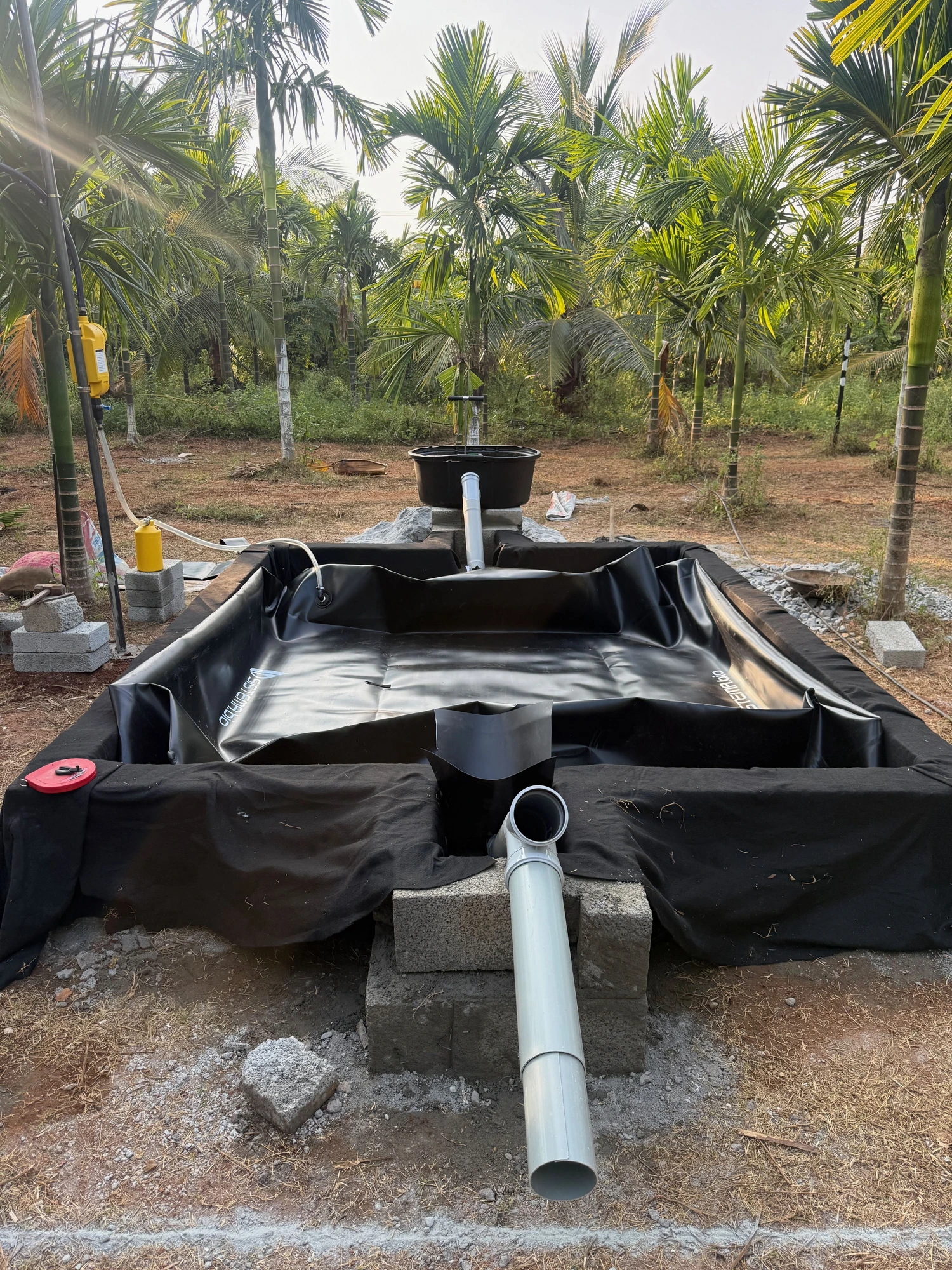
At Bilva Farms, we believe that a sustainable farm is one where nothing goes to waste. Every resource has a purpose, and every by-product can be put to good use. Taking another step towards making our farm self-sufficient, we recently installed a 2 cubic metre per day Systema Bio biogas plant.
Turning Waste into Energy
The plant uses approximately 40 kg of cow dung mixed with 80 litres of water every day. It is expected to generate enough biogas for 2–3 hours of cooking, which will be used by our caretaker’s family at the farm. This means the dung produced by our own cows can now help meet the everyday cooking energy needs of a family living on the farm.
From Biogas to Biofertilisers
The other valuable output is the nutrient-rich slurry generated by the plant. We expect approximately 120 litres of slurry every day. We have constructed a dedicated slurry collection tank with a capacity of nearly 11,000 litres. Our plan is to collect the slurry, dilute it with water and provide it to our plants via sprinkler. The slurry, rich in NPK, will become an important source of organic nutrition for our trees. Our objective is to become completely self-sufficient in biofertilisers and eliminate our dependence on purchased inputs.
Return on Investment
The total investment in the biogas plant, accessories, installation and supporting infrastructure was approximately ₹32,000. The expected annual savings are encouraging:
- ₹12,000 through reduced LPG consumption.
- ₹1.8 lakh through reduced expenditure on purchased biofertilisers, based on last year’s spending.
That’s a potential saving of approximately ₹1.92 lakh every year, against an initial investment of just ₹32,000.
Completing the Circle
Our cows provide the dung, which the biogas plant converts into cooking energy, while the leftover slurry returns to nourish the soil. This simple yet powerful process exemplifies a circular farming ecosystem. Alongside our new biogas system, this year has been remarkable for regenerative farming: we have recharged our borewell, created trenches for water retention, planted vetiver to prevent soil erosion, built vermicompost pits, and regularly added biochar to our biofertiliser to improve soil carbon.
Combined with our solar-powered irrigation and electricity, this is another step towards making Bilva Farms more self-reliant, sustainable and regenerative.
At Bilva Farms, we believe the future of farming lies in creating more value from the resources we already have.