September 23, 2026
From Inspiration to Action: Our Takeaways from the Permaculture Conference
Our participation in the Art of Living Perma Culture Conference on August 22nd and 23rd was an inspiring experience. We met several interesting people, exchanged ideas, and returned with a renewed conviction that sustainable farming is not just about what we grow, but also about how responsibly we use the resources available to us.
We came back with three practical initiatives that we have started to implement over the course of next 2–3 months.
1. Rainwater Harvesting: Slow, Spread and Sink
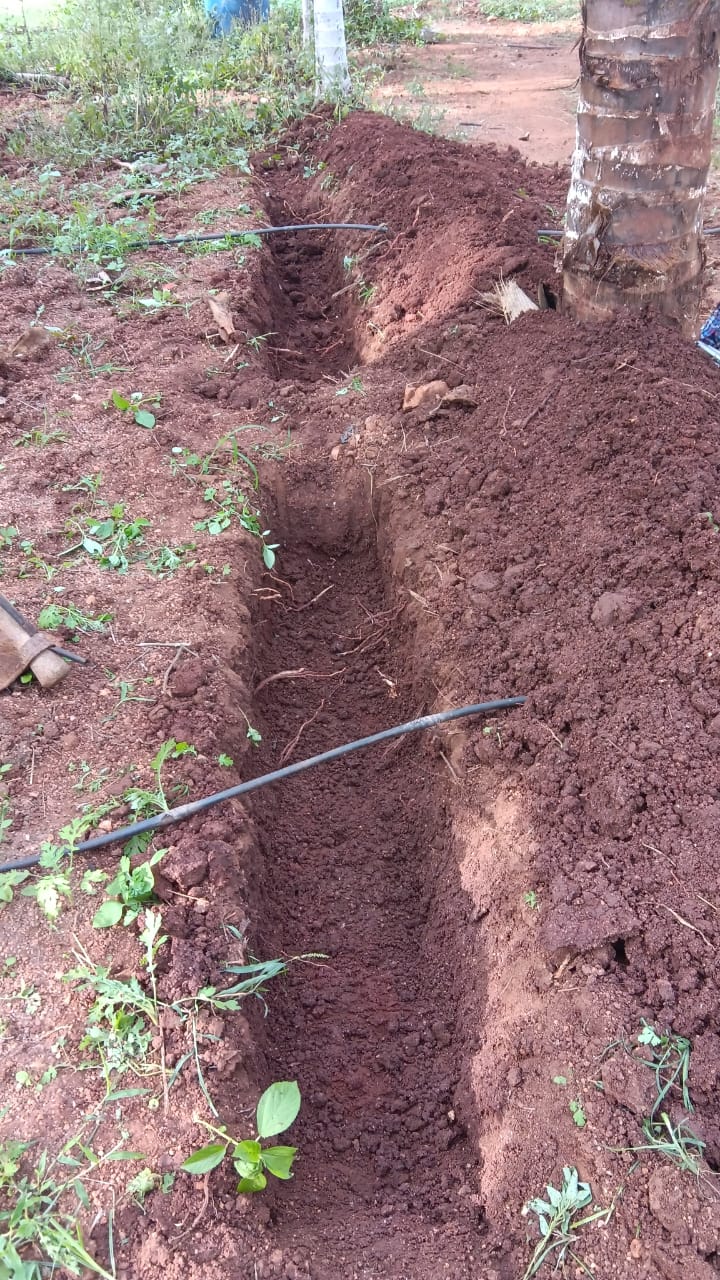
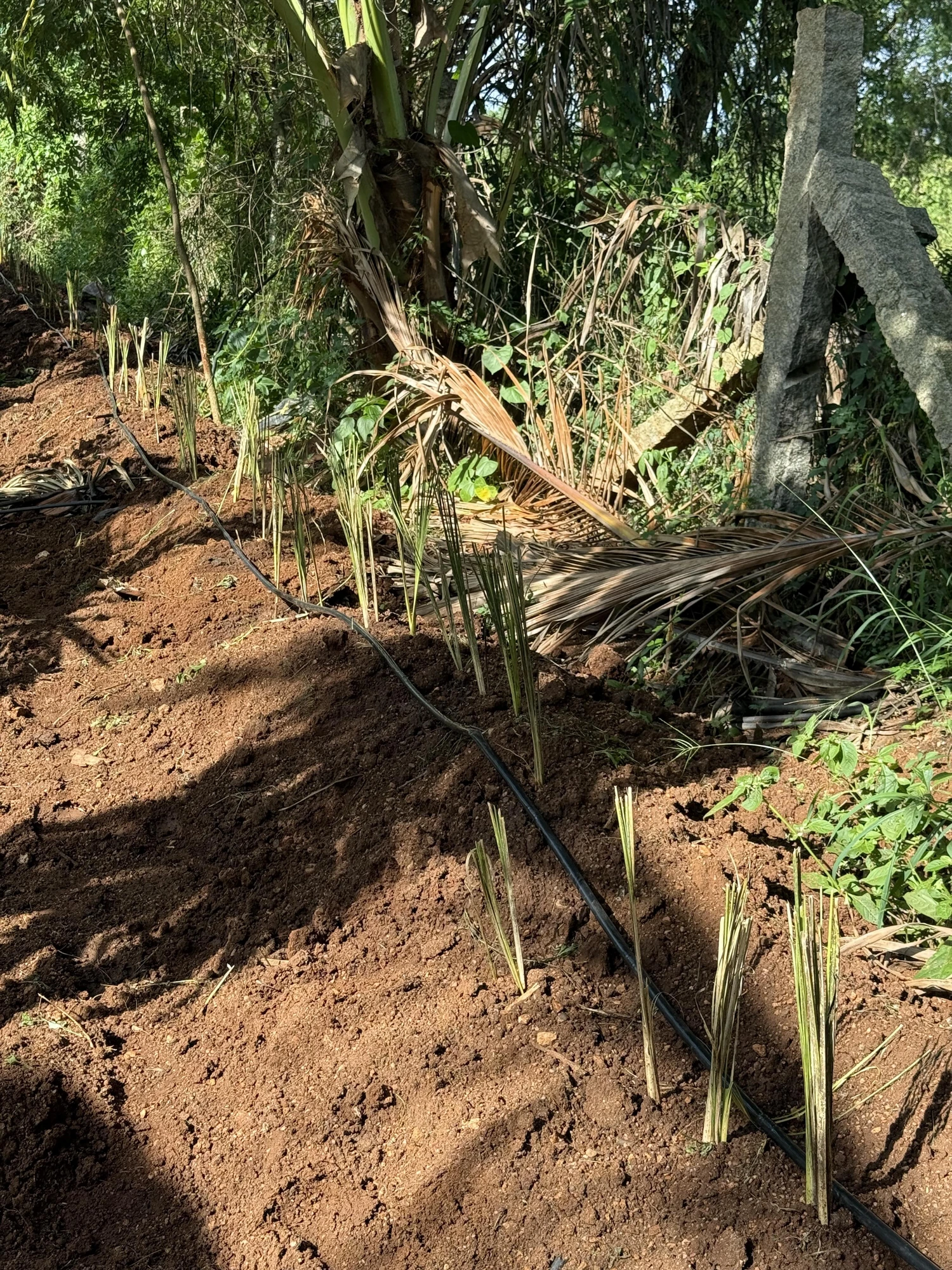
The first is rainwater harvesting, following the methodology of “SSS – Slow, Spread and Sink.” Instead of allowing rainwater to quickly run off the land, we are creating trenches to slow down the flow, spread the water across the farm, and allow it to sink into the soil. These trenches will hold water and help recharge the farm’s aquifers. To further prevent soil erosion, the soil removed from the trenches is being used to create bunds, on which we have planted vetiver.
2. Bringing External Input Costs Close to Zero
Our second focus is to bring our external input costs close to zero. Last year, we spent approximately ₹1.8 lakh on bio-fertilizers. We are now evaluating designs for a 2-cubic-metre biogas plant, which we expect could generate around 15 tonnes of bio-fertilizer annually — which should be enough to meet our farm’s requirements. It will also reduce our LPG expense, currently around ₹10,000 a year. Alongside this, we are setting up a vermicompost bed to further strengthen our on-farm nutrient cycle.
3. A Small Biochar Unit
Finally, we are building a small biochar unit, using farm waste to produce biochar that can be combined with our compost, activated, and then applied back to the soil. Our aim is to improve soil carbon, soil health, and long-term fertility.
What we brought back from the conference was not just knowledge, but a clear action plan. The next few months are about turning these ideas into reality — one trench, one compost bed, and one sustainable practice at a time.